
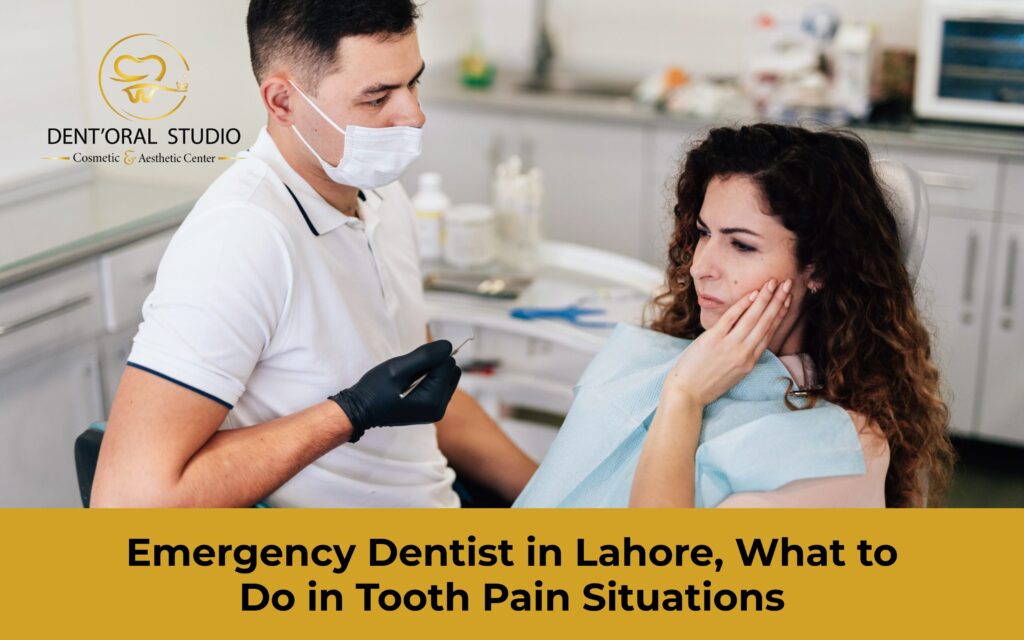
A sudden toothache, a broken tooth, or swelling around your face can make it difficult to know what to do next. Some dental problems can wait for a routine appointment, while others need urgent professional attention to prevent complications. Knowing the difference can help you take the right steps and avoid delaying necessary treatment.
If you are looking for an emergency dentist in Lahore, the first step is to identify your symptoms and determine how urgently you need care. Severe or persistent tooth pain, a knocked-out permanent tooth, dental trauma, and suspected dental infections may require prompt assessment. Difficulty breathing or swallowing, rapidly spreading swelling, or serious facial injuries may require emergency medical care instead of waiting for a dental appointment.
Dentoral Studio, located in Valencia Town, Lahore, provides dental care for a range of oral health concerns. Contact the clinic to discuss your symptoms and confirm appointment availability. This guide explains what counts as a dental emergency, what to do before reaching a dentist, and when to seek hospital emergency care.
What Counts as a Dental Emergency?
A dental emergency is a problem involving your teeth, gums, mouth, or surrounding structures that requires urgent assessment or treatment. The urgency depends on the symptoms, their severity, and whether there are signs of infection, significant injury, or uncontrolled bleeding.
Common dental problems that may require urgent attention include:
- Severe, persistent, or worsening toothache.
- Swelling around the gums, jaw, or face that may indicate an infection.
- A knocked-out permanent tooth.
- A broken or cracked tooth causing significant pain.
- Dental injuries following a fall, accident, or impact to the face.
- Bleeding from the mouth that does not stop with appropriate first aid.
- A suspected dental abscess.
- A lost filling or crown accompanied by significant pain or damage.
Not every chipped tooth or lost filling requires a hospital visit. However, these problems should not be ignored if they cause pain, expose sensitive tooth structures, or worsen over time.
If you are unsure whether your symptoms require urgent care, contact a dental professional and describe what has happened. Do not wait for a routine appointment if you develop serious warning signs.
When Should You See an Emergency Dentist in Lahore?
Certain symptoms suggest that you should arrange prompt dental assessment rather than waiting for your next routine checkup.
Severe or Persistent Toothache
A severe toothache can result from tooth decay, a damaged tooth, inflammation inside the tooth, or an infection. Pain that becomes worse, keeps returning, or interferes with eating and sleeping deserves professional attention.
Other symptoms that make toothache more concerning include:
- Pain when biting or chewing.
- Sensitivity that persists after exposure to hot or cold foods.
- Swelling around the affected tooth.
- A bad taste in the mouth or discharge near the gums.
- Fever or feeling generally unwell.
Pain relief may temporarily reduce discomfort, but it does not necessarily resolve the underlying dental problem.
If you are experiencing tooth pain, read our guide to the causes of tooth pain and ways to manage it at home. Seek prompt professional assessment if the pain is severe, persistent, or accompanied by swelling or other concerning symptoms.
Swollen Face or Gums
Swelling around a tooth or gum can occur because of infection, inflammation, or injury. Facial swelling associated with a dental problem may indicate an infection that requires urgent assessment.
Watch for symptoms such as:
- Swelling around the cheek, jaw, or gums.
- Increasing pain or tenderness.
- Pus or an unpleasant taste in the mouth.
- Fever or feeling unwell.
- Difficulty opening the mouth.
Facial swelling should not be treated as a problem to manage with home remedies alone. Contact a dentist promptly if you suspect a dental infection.
If swelling is rapidly increasing or you have difficulty breathing or swallowing, seek emergency medical care immediately. Do not wait for a routine dental appointment.
For further information, read our guide on facial swelling caused by a tooth infection and when it becomes a dental emergency.
Knocked-Out Permanent Tooth
A permanent tooth that has been completely knocked out requires immediate attention. Prompt, appropriate action may improve the chance of saving the tooth.
If this happens:
- Find the tooth if it is safe to do so.
- Hold it by the crown, which is the visible part of the tooth, rather than the root.
- Avoid touching, scrubbing, or scraping the root.
- If the tooth is dirty, gently rinse it with milk or saline if available. Do not scrub it or use disinfectants.
- If you can easily place the tooth back into its socket without force, do so carefully. Never force it into position.
- If you cannot reinsert it safely, keep it moist in milk or a suitable tooth-preservation solution and seek immediate dental care.
Time matters, so contact a dentist immediately rather than waiting to see whether the tooth becomes painful.
Important: These instructions apply to permanent teeth. A knocked-out baby tooth should not be placed back into the socket because doing so may damage the developing permanent tooth underneath.
For additional guidance, consult the NHS advice on knocked-out teeth.
Broken, Cracked, or Chipped Tooth
A broken tooth can range from a minor chip to a deeper fracture that exposes sensitive inner structures. The level of urgency depends on the extent of the damage and whether pain, bleeding, or swelling is present.
If you break a tooth:
- Rinse your mouth gently with lukewarm water.
- If you can find the broken fragment, keep it in a clean container and take it to your dental appointment.
- Apply a cold compress to the outside of your cheek if swelling develops.
- Avoid chewing on the affected side.
- Avoid very hot, cold, or hard foods if they trigger discomfort.
- Arrange a dental assessment, particularly if the tooth is painful or the fracture is significant.
Do not attempt to repair the tooth with household glue or other non-dental materials.
A minor chip without pain may not require the same urgency as a deep, painful fracture. Nevertheless, a dentist should assess the damage and determine whether treatment is necessary.
Dental Trauma After an Accident
An impact to the mouth can damage a tooth even when no obvious fracture is visible. A tooth may become loose, displaced, painful, or sensitive after an accident.
Seek prompt dental assessment if a tooth has been knocked out of position, become loose, or developed pain after an injury.
If the injury involves a suspected broken jaw, significant facial trauma, heavy bleeding, loss of consciousness, or difficulty breathing, seek emergency medical care.
Do not try to force a displaced tooth back into position yourself.
Lost Filling or Crown
A lost filling or dental crown can expose the underlying tooth and cause sensitivity or discomfort. Whether it is an emergency depends on the extent of the damage and the symptoms.
Until you can obtain professional advice:
- Keep the area clean.
- Avoid chewing hard foods on the affected side.
- Avoid foods or drinks that trigger sensitivity.
- Do not use household adhesives to attach a crown.
- Contact your dentist to discuss the problem and arrange an appropriate appointment.
If the exposed tooth causes severe pain, breaks further, or develops swelling, seek prompt assessment.
When Should You Go to a Hospital Instead of a Dentist?
Some dental problems can become medical emergencies. Recognising serious warning signs is essential because waiting for a routine dental appointment may be unsafe.
Seek emergency medical care immediately if you experience:
- Difficulty breathing or swallowing.
- Rapidly spreading swelling of the mouth, face, or neck.
- Significant swelling around the eye accompanied by vision changes.
- Serious facial or jaw trauma.
- Heavy bleeding that does not stop with appropriate first aid.
- Signs of a severe infection accompanied by significant deterioration in your general condition.
A dental abscess can require urgent dental treatment, but spreading infection or airway-related symptoms may require hospital care.
Do not delay emergency medical care while trying home remedies, searching for an available clinic, or waiting for a callback.
For further information about the symptoms and treatment of a dental abscess, consult the NHS dental abscess guidance.
What to Do Before You Reach an Emergency Dentist
The right steps depend on the problem. The measures below may help protect the affected area or reduce discomfort while you arrange appropriate care. They are not substitutes for professional assessment.
What to Do for a Severe Toothache
If you develop severe tooth pain:
- Gently rinse your mouth with lukewarm water.
- Carefully remove trapped food if you can do so without injuring the gums.
- Avoid chewing on the affected tooth.
- Avoid very hot, cold, or sugary foods if they make the pain worse.
- If appropriate for you, use an over-the-counter pain reliever according to its label and seek advice from a pharmacist or healthcare professional if you are unsure.
- Contact a dentist for an assessment.
Do not place aspirin directly on your tooth or gums, as this can damage the surrounding tissue. Avoid taking leftover antibiotics or medication prescribed to another person.
If toothache is accompanied by facial swelling, fever, or worsening symptoms, seek prompt professional advice rather than relying on pain relief alone.
What to Do for a Broken Tooth
A broken tooth should be handled carefully to avoid further damage.
- Rinse your mouth gently with water.
- Save any broken pieces if you can find them.
- Avoid biting down on the damaged tooth.
- Apply a cold compress to the outside of your cheek if swelling occurs.
- Arrange a dental assessment.
If the fracture causes severe pain, bleeding, or significant injury, seek urgent care. If there are signs of serious facial trauma or difficulty breathing, seek emergency medical assistance.
What to Do for Facial Swelling
Facial swelling associated with a dental problem may indicate infection and should be assessed promptly.
You can take the following steps while arranging care:
- Contact a dentist and explain the swelling and any accompanying symptoms.
- Use a cold compress on the outside of the cheek for temporary comfort if appropriate.
- Avoid squeezing, puncturing, or attempting to drain the swollen area.
- Do not take leftover antibiotics without professional advice.
If swelling spreads rapidly or affects breathing or swallowing, go to an emergency department immediately.
What Not to Do During a Dental Emergency
Some common home remedies can make a dental problem worse or delay necessary treatment.
Avoid:
- Applying aspirin directly to the tooth or gums.
- Using household glue to repair a broken tooth or attach a crown.
- Attempting to drain a dental abscess yourself.
- Taking antibiotics without appropriate medical or dental advice.
- Ignoring severe pain because a painkiller temporarily helps.
- Delaying urgent treatment while waiting for symptoms to disappear.
When in doubt, contact a dental professional and explain your symptoms clearly.
How to Find an Emergency Dentist Near You in Lahore
If you search online for an emergency dentist near me, you need more than a clinic name. You need to know where the clinic is located, whether it can assess your problem, and how to arrange an appointment.
Check the Clinic’s Location
Choose a clinic whose location is practical for your situation. If you are searching in Valencia Town or nearby parts of Lahore, confirm the clinic’s address and directions before travelling.
You can visit the Dentoral Studio website to review the clinic’s location and dental services.
Call Before Visiting
Contact the clinic and explain what has happened. Mention:
- Where the pain or swelling is located.
- When the symptoms started.
- Whether the pain is getting worse.
- Whether you have fever, bleeding, swelling, or a dental injury.
- Whether a permanent tooth has been knocked out.
This information can help the clinic advise you about appointment availability and whether your symptoms require a different level of care.
Do not assume that every dental clinic offers walk-in, same-day, or round-the-clock emergency appointments. Confirm availability directly.
Confirm the Treatment You Need
Not every clinic provides every type of dental treatment. Depending on your condition, you may need a dental examination, imaging, restorative treatment, specialist care, or referral to a hospital.
You can review Dentoral Studio’s general dentistry services to learn more about its general dental care offerings. Contact the clinic to confirm whether it can assess your particular concern.
Contact Dentoral Studio in Valencia Town, Lahore
If you are looking for dental care in Valencia Town, Lahore, contact Dentoral Studio to discuss your dental concern and confirm whether an appropriate appointment is available.
- Clinic: Dentoral Studio
- Location: 4-P Commercial, Valencia Town, Lahore, Punjab, Pakistan
- Phone: +92-333-4493858
- Website: Dentoral Studio
- Appointments and enquiries: Contact Dentoral Studio
Contact the clinic before visiting to confirm appointment availability and whether your particular dental concern can be assessed there.
If you have symptoms such as difficulty breathing or swallowing, rapidly spreading swelling, or serious facial trauma, seek emergency medical care rather than waiting for a routine appointment.
What Happens During an Emergency Dental Appointment?
Knowing what to expect can help you prepare for an urgent dental visit. The exact process depends on your symptoms and the nature of the problem.
Initial Assessment
The dentist will ask about your symptoms, when they started, how severe they are, and whether anything makes them better or worse. You may also be asked about relevant medical conditions, medications, allergies, and previous dental treatment.
Dental Examination and Imaging
The dentist may examine your teeth, gums, and surrounding tissues. Dental X-rays or other appropriate investigations may be recommended if needed to understand the cause and extent of the problem.
Not every emergency requires an X-ray; the decision depends on the clinical findings.
Pain Relief and Stabilisation
Depending on the diagnosis, the initial priority may be to manage pain, protect a damaged tooth, address an urgent infection-related problem, or stabilise a dental injury.
The immediate treatment may not be the final treatment. Some conditions require follow-up appointments or referral for specialist care.
Treatment Plan and Follow-Up
After assessing the problem, the dentist can explain the findings, possible treatment options, expected next steps, and any follow-up requirements.
Ask questions if you do not understand the proposed treatment or the reason it is recommended.
Which Treatments May Be Needed for a Dental Emergency?
Emergency dental treatment depends on the cause of the symptoms. There is no single procedure that is appropriate for every patient.
Root Canal Treatment
If the inner tissue of a tooth is severely inflamed, damaged, or infected, root canal treatment may be recommended when the tooth can be saved.
The dentist will assess the tooth and explain whether root canal treatment or another option is appropriate. You can also explore Dentoral Studio’s general dentistry services for information about its dental care offerings.
Treatment for a Dental Abscess
A dental abscess is a collection of pus associated with an infection. Treatment focuses on addressing the source of the infection. Depending on the cause and condition of the tooth, treatment may involve drainage, root canal treatment, extraction, or another clinically appropriate approach.
Antibiotics may be indicated in certain situations, but they do not replace necessary dental treatment. Do not self-medicate with leftover antibiotics.
For symptoms and warning signs, refer to the NHS guide to dental abscesses.
Repairing a Broken Tooth
A damaged tooth may be treated with a filling, bonding, a crown, or another restoration, depending on the extent and location of the damage.
If the fracture is severe, the dentist may discuss additional treatment options.
Tooth Extraction
If a tooth is too damaged to be restored or cannot reasonably be saved, extraction may be considered. The decision depends on the examination, the condition of the tooth, and the available treatment options.
You can learn more about oral surgery and tooth extraction at Dentoral Studio. A dentist should explain the reasons for the recommended treatment and discuss appropriate alternatives where available.
How Much Does Emergency Dental Treatment Cost in Lahore?
The cost of emergency dental treatment depends on the condition being treated and the procedures required. A consultation for toothache may involve different investigations and treatment from a knocked-out tooth, a complicated fracture, or a suspected dental abscess.
Factors that may affect the overall cost include:
- The severity and complexity of the dental problem.
- Whether an examination or dental X-rays are required.
- Whether the tooth needs a filling, root canal treatment, extraction, or another procedure.
- Whether specialist treatment or additional appointments are needed.
- The need for follow-up care.
The most reliable way to understand the likely cost is to have the problem assessed and request a treatment plan with an explanation of the recommended procedures.
If you are contacting Dentoral Studio, describe your symptoms and ask about appointment availability and the consultation process. The appropriate treatment and its cost can be discussed once the clinical situation is understood.
How Can You Reduce the Risk of Future Dental Emergencies?
Not every dental emergency can be prevented, but regular dental care and early attention to symptoms may reduce the risk of some problems becoming more serious.
Consider the following habits:
- Attend regular dental checkups: Routine examinations can help identify problems before they become more complicated.
- Address toothache early: Do not repeatedly rely on painkillers without finding out why the tooth hurts.
- Maintain good oral hygiene: Brush twice daily with fluoride toothpaste and clean between your teeth regularly.
- Protect your teeth during sports: Use an appropriate mouthguard when recommended for contact sports.
- Avoid biting hard objects: Do not use your teeth to open packaging or bite objects that could fracture them.
- Arrange assessment for damaged dental work: A loose crown, broken filling, or cracked tooth should not be ignored.
- Follow your dentist’s advice: Complete recommended treatment and attend follow-up appointments.
Early assessment does not guarantee that every dental problem can be prevented, but it can help you make informed decisions about your oral health.
Frequently Asked Questions About Emergency Dentists in Lahore
What Qualifies as a Dental Emergency?
Severe or persistent toothache, a knocked-out permanent tooth, significant dental trauma, suspected dental abscess, and swelling associated with infection may require urgent assessment. Difficulty breathing or swallowing, rapidly spreading swelling, and serious facial injuries require emergency medical attention.
Should I Visit an Emergency Dentist for Severe Toothache?
Yes, severe, persistent, or worsening toothache should be assessed promptly, particularly if it interferes with eating or sleeping or occurs with swelling or fever. Pain relief may help temporarily, but it does not establish or treat the underlying cause.
For further information, read our guide to the causes of tooth pain and ways to manage it at home.
Is Facial Swelling From a Tooth Infection an Emergency?
Facial swelling associated with a dental infection requires prompt professional assessment. If the swelling spreads rapidly or you have difficulty breathing or swallowing, seek emergency medical care immediately.
What Should I Do If My Permanent Tooth Gets Knocked Out?
Handle the tooth by its crown rather than its root, avoid scrubbing it, and seek immediate dental care. If you cannot safely place it back into its socket, keep it moist in milk or a suitable tooth-preservation solution. Never force it into position. Do not reinsert a knocked-out baby tooth.
Read the NHS guidance on knocked-out teeth for additional first-aid information.
Can a Dental Abscess Go Away on Its Own?
A dental abscess generally requires professional treatment to address the source of the infection. Symptoms may change temporarily, but that does not mean the infection has resolved. Seek prompt dental assessment, and obtain emergency medical care if you develop serious warning signs such as difficulty breathing or swallowing or rapidly spreading swelling.
Can I Take Antibiotics for a Tooth Infection Without Seeing a Dentist?
Do not take leftover antibiotics or medication prescribed to someone else. Antibiotics are not necessary for every dental infection, and they may not resolve the underlying source of the problem. A dentist or other qualified healthcare professional can determine the appropriate treatment.
How Do I Find an Emergency Dentist Near Me in Lahore?
Check the clinic’s location, contact details, and available services. Call before travelling to explain your symptoms and confirm appointment availability. You can find Dentoral Studio’s location and contact options on its contact page.
If your symptoms suggest a medical emergency, seek emergency medical care rather than waiting for a dental appointment.
Does Dentoral Studio Accept Emergency Dental Appointments?
Contact Dentoral Studio directly to discuss your symptoms and confirm current appointment availability and the services appropriate for your condition. Do not assume that same-day, walk-in, or 24-hour appointments are available without confirmation.
Contact Dentoral Studio for Dental Care in Lahore
Dental problems can become more complicated when urgent symptoms are ignored. If you have persistent tooth pain, a damaged tooth, or symptoms that may indicate a dental infection, seek appropriate professional advice rather than relying on home remedies alone.
Dentoral Studio is located in Valencia Town, Lahore. Contact the clinic to discuss your concern, confirm appointment availability, and find out whether your dental problem can be assessed there.
Call: +92-333-4493858
Book or enquire: Contact Dentoral Studio
If you have difficulty breathing or swallowing, rapidly spreading swelling, or a serious facial injury, seek emergency medical care immediately.


