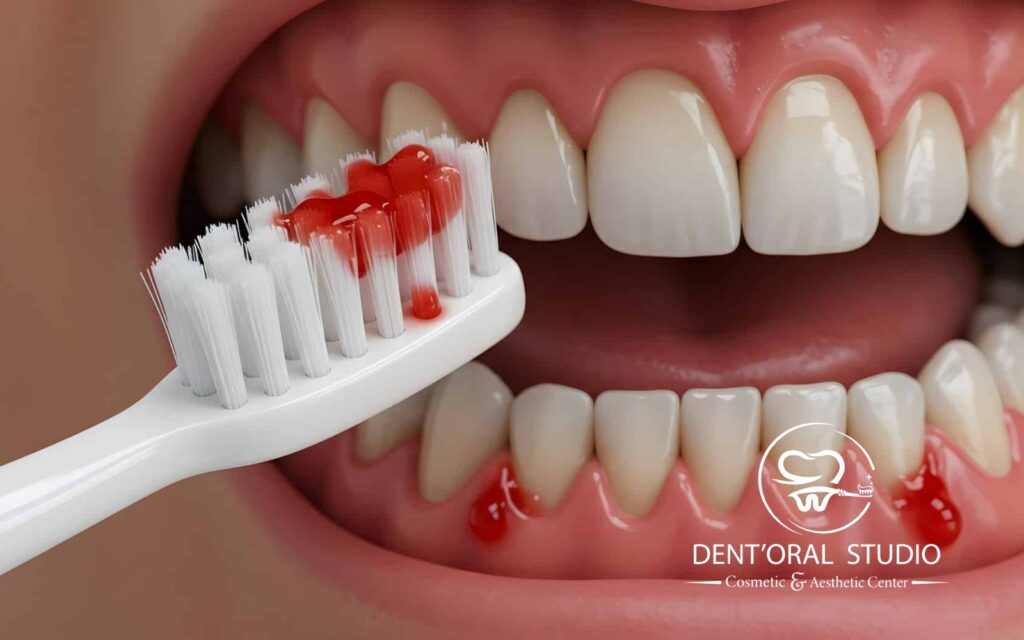
The primary cause of bleeding gums is gingivitis. The buildup of plaques at the gumline is an early signs of gum disease. Aggressive brushing can cause occasional bleeding. But surprisingly, the persistent bleeding is a clear signal of inflammation, Vitamin C deficiency, and hormonal changes. If it is left untreated can lead to periodontitis that can cause tooth loss. That’s why the experts at Dentoral Studio recommend proper professional dental checkups if teeth are continuously bleeding for more than 7 – 10 days despite improved hygiene.
Why Are My Gums Bleeding? – A Logical Answer
It’s a common morning routine: you brush, you spit, and you see a streak of pink in the sink. But many people take this for granted. They think so bleeding gums is a minor byproduct of brushing too hard. One must understand the threshold between a minor irritation and a systemic health risk. In the world of clinical dentistry, blood is a clear distress signal.
When talking particularly about the Lahore audience, a lot of dental studies show a high prevalence of oral health issues. As we know, the dietary habits and rising sugar consumption are major reasons for dental problems. Let’s explore all the early signs of gum disease and how proactive care could be the best defense against tooth loss.
1. What’s Happening: Understanding the Science of the Pink Spit
One should understand that gums won’t bleed without a reason. If you have a healthy gingival tissue, it is firm, have pale pink color, and tightly fits around the teeth, it’s due to the gingivitis issue. Here’s the clear breakdown of pink spit science: what happens and why it happens.
- Plaque Accumulation: When you don’t remove the biofilm of plaque on time, it gets harder over time and results in the development of tartar.
- Inflammatory Response: The defensive response of your body signals to send extra blood to the area to fight the bacteria. This is growing in plaque that grows gums, swelling, and is fragile.
- Tissue Breakdown: These bacterial toxins begin to erode the seal between your teeth and gums, leading to tissue breakdown.
2. Know the Early Signs of Gum Disease You Shouldn’t Ignore
Bleeding isn’t the only symptom. One must look at the clinical progression of oral infections. If you want to know the early signs of gum disease, watch for these red flags:
- Persistent Halitosis: It means bad breath. A constant smell doesn’t go away with mouthwash.
- Receding Gumline: Your teeth may appear longer as the tissue pulls away.
- Tenderness and Redness: Healthy gums are pink. In contrast, diseased gums are often dusky red or purple.
- Changes in Bite: If your teeth feel like they’re shifting, the underlying bone may already be affected.
3. When to Worry: The Transition to Periodontitis
If you ignore the early signs of gum disease, it evolves into Periodontitis. At this stage, the damage becomes irreversible without surgical intervention. Lahore has a humid climate that can produce oral bacteria quickly if hygiene isn’t followed.
When the infection reaches the bone, you risk losing the structural support of your smile. This is often the point where patients begin researching the benefits of dental implants in Lahore to replace lost teeth. Prevention is always the superior and more affordable path.
4. Common Triggers Beyond Poor Hygiene
While plaque is the number one culprit, other factors can make your gums more susceptible to bleeding:
- Pregnancy Gingivitis: In this condition, the hormonal shifts increase blood flow to the gum tissues.
- Vitamin Deficiencies: Also, the lack of Vitamin C or K can weaken tissue repair.
- Aggressive Technique: Using a hard-bristle brush can cause physical trauma.
- Smoking: Tobacco use masks bleeding by restricting blood flow, meaning your disease might be advanced before you even see blood.
5. The Role of Professional Dental Checkups in Lahore
Our Lahore patients often ask: “How often should you get a dental checkup?” Our expert dentists answer them every six months.
A routine checkup involves more than just a cleaning at Dentoral Studio. We use advanced diagnostics to measure pocket depths, the space between your tooth and gum. Pockets deeper than 3mm are a clear indicator that you need a professional scaling and polishing to stop the bleeding.
Comparing Gum Health Stages
| Features | Healthy Gums | Early Gingivitis | Periodontitis |
| Color | Pale Pink | Bright Red | Dusky Red or Purple |
| Bleeding | No | During brushing/flossing | Both |
| Bone Loss | No | No | Yes |
| Treatment | Routine Cleaning | Deep Cleaning “Scaling” | Surgery / Implants |
6. From Prevention to Restoration: Dental Implants
If gum disease has already caused tooth loss, the focus shifts to restoration. The benefits of dental implants extend beyond aesthetics. They act as artificial roots. They also prevent the jawbone from shrinking, which is seen as the most common side effect of missing teeth.
If you are considering this route, keep in mind the dental implant recovery time in Pakistan. Generally, it takes 3 to 6 months for the implant to fuse with the bone. This process is known as osseointegration. During this time, maintaining pristine gum health is mandatory to ensure the implant doesn’t fail due to peri-implantitis.
7. Actionable Steps to Stop Bleeding Gums Today
By following these important steps, you can stop your bleeding gum problem as quickly as possible. It includes the following things:
- Switch to a Soft Brush: Stop scrubbing; use circular, gentle motions.
- Floss Correctively: Don’t snap the floss into the gums. Curve it into a ‘C’ shape around the tooth and then use it.
- Saltwater Rinses: A natural antiseptic that reduces immediate inflammation.
- Hydration: Drinking more water helps wash away food debris and acid in the Lahore heat.
Conclusion
Don’t wait for the pain to start. Protecting your natural teeth and being aware of the early signs of gum disease. This is the best investment that you can make. Bleeding gums are often painless. So don’t think that everything is right. It hurt you in the future. With time, the infection is going to be deeper. So, if you’ve noticed pink spit more than three times in a week, go for a dental checkup in Lahore. So maintain your long-term health.
FAQs About Early Signs of Gum Disease
Q1: Can I reverse gum disease at home?
Improved brushing, flossing, and professional cleaning can reverse the gum disease at home. However, periodontitis, which is simply known as advanced gum disease, often requires proper clinical treatment. The expert dentists help you to stop the bone loss in this situation.
Q2: How often should you get a dental checkup in Lahore?
The expert dentists and orthodontists suggest getting a dental checkup every 4-6 months. But also, if you have a bleeding gum problem, you’re recommended to visit every 2-3 months.
Q3: What is the typical dental implant recovery time in Pakistan?
The typical dental implant recovery time may vary depending on your individual health and bone density.
Q4: Do bleeding gums mean I need dental implants?
No, really not. Bleeding is actually a sign of infection. Early diagnosis helps in saving your teeth. Modern-day dentists use the implant treatment only in cases of gum disease. They can do this just to save your teeth from falling out.
Q5: Is gum disease linked to heart health?
Yes, the advanced dental health institute report suggests that bacteria are responsible for gum disease. It has the potential to enter the bloodstream and can increase the risk of heart disease.