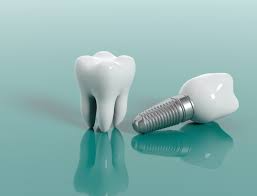
The use of advanced technologies in medical and dental sciences is doing miracles. The same goes for the 3D scanning for dental implants. This fast-paced technology is explicitly used to show the perfect advancement in modern dentistry. Now, it has completely changed the dental professional plans and implant techniques. Luckily, this change becomes helpful for patients by providing accurate real-time results and less discomfort in the whole process. Dental Studio Valencia Town, Lahore, admires this scanning technology that ensures every process achieves optimal precision and success.
What is 3D Scanning for Dental Implants?
To know this concept deeply, first, you need to develop an understanding of what 3D scanning for dental implants actually is. Simply, we can say that it’s a digital imaging process that can thoroughly capture all the details and three-dimensional images of your teeth, mouth, and jaw structure.
Unlike the traditional impression methods that are even messier and prolonged, the digital scanning can give you an accurate and precise blueprint in no time. 3D scanning for dental implants, if combined with other intraoral scanning, can give more valuable information to make the whole process even more precise and detailed, which will help you to understand your dental treatment process without confusion.
Many studies show that intraoral scanning reduces procedure time significantly, with digital impressions taking between 6 and 20 minutes compared to traditional impressions that range between 11 and 28 minutes. This efficiency translates directly into a better patient experience.
How Does Digital Scanning Work in Implant Dentistry?
Several components are combined and work together to make the digital implant scanning process easier. These include:
-
- Intraoral Scanner Capture: It’s a small, handy device that moves around your mouth, and it can take thousands of images per second. These images are then instantly compiled and designed into a 3D model that can explain the condition of your teeth and gums.
- CBCT Imaging Integration: It’s like a core beam scan that describes the complete jawbone structure. It can also show the density and location of the complete anatomical features of nerves and sinuses, and explain the implant procedure with millimeter-level precision.
- Computer-Aided Design: This specialized software, combined with intraoral and CBCT scanning, helps the dentist to create the procedure plan for the exact position, angle before the in-depth implant surgery begins.
The Accuracy Advantage of 3D Scanning
Implant accuracy suggests that digital scanning primarily outperforms the traditional methods. An in vitro research study reveals that the photogrammetry systems achieve the trueness values ranging from 10 to 77 micrometers, with precision between 2 to 203 micrometers. So that a human hair measures approximately 70 micrometers in diameter.
The same goes with the modern digital impression system that shows accuracy levels below 85 micrometers for multiple implant cases that is the most acceptable clinical range for any procedure. This level of precision shows:
- How the implants integrate with its surrounding bone
- It also shows the final restoration without any adjustments.
- The adjacent teeth’s and structure remain unchanged
- And the treatment outcomes are predictable and more reliable.
Another detailed accuracy analysis shows that CAD implant planning can produce a mean placement error of just 1 milimeter at entry pint and 1.2 at the apex and it can only be with an average angular deviation of 3.8 degrees. This can help us to understand the high success rates of these digitally planned implants.
Benefits of 3D Scanning for Patients
The choice of processing with 3D imaging can offer numerous advantages over traditional methods. So, choosing the 3D scanning for dental implants benefits not only the treatment process, but also patients with:
- No more messy impressions
- Reduced treatment time
- Fewer appointments
- Better communication
- Increased comfort
- Accurate and anticipated treatment outcomes
How Does 3D Scanning Help in the Digital Workflow in Implant Treatment?
As we all know that the use of advanced technology can make our work and treatment processes smoother and easier than ever before. So, the understanding of this digital implant workflow helps us to understand how technology improves our medical as well as dental treatment processes.
These treatments help in the following way:
Initial Consultation and Scanning
The initial consultation and scanning are always more comprehensive and evaluative. The orthodontic expert uses the intraoral scanner to capture the detailed images of your mouth and teeth. After that, the CBCT scans provide detailed information about the bone, structure, and anatomy. Before moving further, the dentist discusses all the details with you. Once you are approved, the next process can start.
Virtual Planning
After approval, the dentist can create a comprehensive virtual treatment plan. The selection of the implant size, its positioning, and angle, and the necessary bone grafting. A patient can review it too and can see what will happen after the surgery.
Personalized Surgical Guide
The customized plan, based on the initial consultation, complete customized surgical guide is made by using 3D printing technology. Then, during the procedure, this guide ensures that the implants are placed accordingly. This approach helps in reducing the risk factors and increasing the success rates.
Digital Restoration Design
When the implant heals properly, another scan captures the implant position. The dental laboratory experts use this data to design and manufacture your crowns and bridges with CAM systems, so you’ll get a perfect look permanently.
Use and Applicability of 3D Scanning in Implant Dentistry
3D scanning is one of the most powerful scanning procedures that can be used and applied in various dental treatments. This treatment is not only limited to dental implants, but rather it can also be used in:
- Individual Tooth Replacement: The placement of an individual tooth can also be done by digital scanning, which can create a natural smiling look results matched with the adjacent teeth.
- Multiple Missing Teeth Treatment: For those patients who have several missing teeth, 3D scanning can help them by giving a perfect distribution of implants to support bridges and their long-term stability.
- Full Arch Restoration Treatment: For all on-4 and All-on-6 treatments, digital scanning is much needed.
- Complex Bone Grafting: The 3D scanning is also needed in assessing the bone augmentation to plan the grafting procedures accurately with predictable outcomes.
Comparing Digital vs. Traditional Implant Methods: Which Performs Well
This debate has been going on for a long time about which implant treatment is better. Traditional or Digital? To develop a better understanding, we briefly explain the goods and bads of each treatment here.
Traditional Implant Methods
The traditional implant method mainly relies on physical impressions by using putty-like materials and 2D X-rays. This method has some limitations that include:
- Distortion of physical impressions
- 2D imaging provides limited information
- It depends only on clinical experience
- Multiple appointments are required.
- Adjustments to the final restoration are common
- Adjustments to final restorations are common
Digital Dental Implant Methods
The digital dental implants are made using the advanced 3D technological system. These methods are more unique and precise, which can give you immediate and long-lasting satisfied results with up to no pain treatments. This may include:
Virtual models never distort
3D scanning and imaging give detailed information
Computerized surgical guides ensure accuracy
It reduces appointments
It can give you a perfect fit that has minimal risk of adjustments.
Research comparing these methods found that although the conventional techniques provided excellent accuracy, intraoral scanners produced comparable results with added benefits of speed and patient comfort.
Cost Considerations and Value in 3D Scanning Procedures
For patients, the value proposition of 3D Scanning for dental implants is strong, while it may involve higher upfront technological costs. It benefits in many ways:
Success Rates with Digital Planning
The modern dental implants achieve higher success rates with up to 99% exceptional outcomes. The main reason is the digital workflow and guided surgical processes. These success rates can ultimately give confidence to the patients that their investment is not a waste, and they’ll get accurate and predictable results
Conclusion
So, with all the discussions and statistical data, we can definitely say that, undoubtedly, 3D scanning for dental implants is a major step forward in restorative dentistry. The modern precision and efficiency of the treatment procedures can help the patient relax and feel comfortable, unlike traditional methods.
From initial diagnosis to final restoration, digital accuracy in dental implants is thoroughly planned with complete attention to detail. Dentoral Studio appreciates these advancements and understands that the future of dental implants is digital. So if you have already adapted to this reality and are ready to choose it, you’re giving yourself an advantage for the successful outcome that can restore the function and confidence simultaneously.