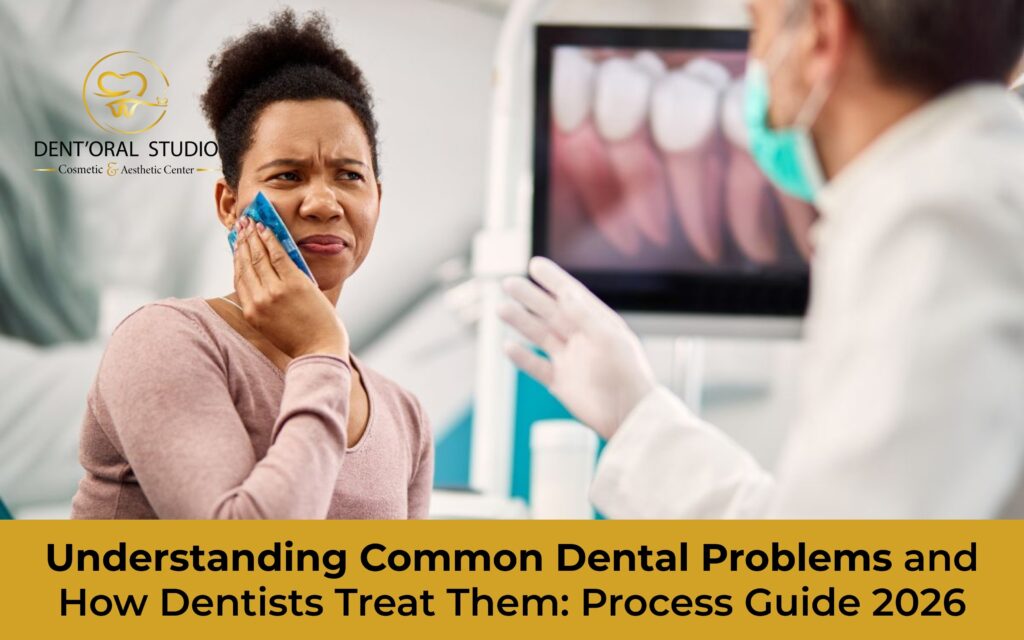
You had a root canal to stop tooth pain, so feeling pain when you bite afterward can be confusing. Mild pressure sensitivity during the first few days can happen while the tissues surrounding the tooth heal. Pain that persists, gets worse, feels sharp, or returns after you had been comfortable deserves a closer look.
At Dentoral Studio, we look beyond the fact that a tooth has already received root canal treatment. Biting pain can come from something relatively simple, such as a filling or crown sitting slightly too high. It can also point to an inflamed periodontal ligament, a cracked tooth, a restoration problem, persistent infection, or reinfection.
Most importantly, pain when biting does not automatically mean your root canal treatment, or RCT, has failed. The timing, type of pain, bite alignment, condition of the restoration, and surrounding tissues all help determine what is happening.
Is It Normal for a Root Canal Tooth to Hurt When You Bite?
Yes, some tenderness when biting can be normal shortly after a root canal. The nerve tissue inside the tooth has been removed, but the periodontal ligament, bone, and tissues surrounding the root are still alive and can remain inflamed after treatment.
This explains something that often confuses patients: if the nerve is gone, why does the tooth still hurt?
The discomfort does not necessarily come from inside the treated tooth. Pressure from biting can stimulate inflamed tissues around the root.
Mild soreness that steadily improves is different from pain that becomes stronger, stays unchanged, or returns later.
How Long Should Biting Pain Last After a Root Canal?
Mild tenderness commonly improves during the first several days after root canal treatment. Recovery varies depending on how inflamed or infected the tooth was before treatment and what procedures were required.
A practical timeline looks like this:
| Time After Root Canal | What You May Notice | What to Do |
|---|---|---|
| First 1 to 3 days | Mild soreness or pressure when chewing | Follow aftercare instructions and monitor |
| Days 3 to 7 | Tenderness should generally be improving | Continue monitoring |
| Around 1 to 2 weeks | Persistent sensitivity may need assessment, especially if it is not improving | Contact your dentist |
| At any point | Increasing pain, swelling, drainage, or fever | Seek prompt professional evaluation |
| Months or years later | New biting pain after a symptom-free period | Have the tooth examined |
There is no universal day when every root canal treated tooth must feel completely normal. The trend matters. Pain that gradually decreases is different from pain that keeps intensifying.
What Your Pain When Biting Might Be Telling You?
The way your tooth hurts can provide useful clues, although symptoms alone cannot confirm a diagnosis.
| What the Pain Feels Like | Possible Cause | What Your Dentist May Check |
|---|---|---|
| Tooth feels like it hits first | High filling or crown | Bite and occlusion |
| Dull soreness with pressure | Inflamed periodontal ligament | Bite, percussion, surrounding tissues |
| Sharp pain on a specific area | Crack or fracture | Bite test and structural examination |
| Pain when releasing your bite | Possible crack | Individual cusp and crack assessment |
| Pain around a new crown | High bite, crown fit, or ligament inflammation | Crown and occlusion |
| Throbbing pain with swelling | Persistent or recurrent infection | Clinical examination and imaging |
| Pain returning months or years later | Leakage, decay, crack, periodontal problem, or reinfection | Complete dental and endodontic evaluation |
These patterns can guide an examination, but they should not be used to diagnose a failed root canal at home.
7 Reasons Your Tooth May Hurt When Biting After a Root Canal
Pain with pressure can develop for several reasons. Some require only a relatively straightforward correction, while others may need further endodontic treatment.
1. Your Filling or Crown Is Sitting Too High
A high bite is one of the mechanical reasons a recently treated tooth can hurt when chewing.
After root canal treatment, the tooth may receive a temporary filling, permanent filling, or crown. If that restoration sits slightly higher than the surrounding teeth, the treated tooth may make contact first every time you close your mouth.
That repeated pressure can irritate the periodontal ligament.
A common clue is that the treated tooth feels “taller” than your other teeth.
You may notice discomfort when:
• Biting down firmly
• Chewing on that side
• Clenching your teeth
• Bringing your teeth together without food
Your dentist can check your occlusion, which describes how your upper and lower teeth meet. If the restoration is too high, an appropriate bite adjustment may reduce the excessive pressure.
Do not try to file or adjust a filling or crown yourself.
2. The Periodontal Ligament Is Still Inflamed
Removing the pulp does not make the entire tooth area incapable of feeling pain.
The periodontal ligament, or PDL, surrounds the root and connects the tooth to the supporting bone. This tissue contains sensory nerve fibers and can become tender after root canal treatment.
Inflammation may result from the condition that originally required the root canal, treatment around the root, or excessive biting pressure afterward.
The result may feel like a dull bruise when you chew.
If this tenderness is part of normal healing, it should generally trend toward improvement rather than becoming progressively worse.
3. The Tooth or Root May Be Cracked
A crack can produce sharp, localized pain when you bite.
Some teeth that need root canal treatment have already lost significant tooth structure because of decay, large restorations, trauma, or previous dental work. A crack may also be difficult to identify because it does not always appear clearly on a standard dental X-ray.
Possible clues include:
• Sharp pain when chewing
• Pain focused around one part of the tooth
• Pain when pressure is released
• Symptoms that come and go
• Pain associated with certain foods or biting angles
Cracks vary considerably in location and severity. Some teeth can be restored, while deeper fractures may significantly affect the prognosis.
This is why persistent sharp biting pain should be evaluated rather than repeatedly tested at home.
4. The Crown or Filling Has a Fit or Leakage Problem
The restoration placed over a root canal treated tooth matters because it helps protect and seal the tooth.
Problems can develop if a temporary or permanent restoration becomes loose, damaged, or compromised. Decay can also develop around restoration margins over time.
If the seal is lost, bacteria may gain access to areas that were previously treated.
A restoration problem does not always mean the original root canal was performed incorrectly. It can develop after otherwise successful treatment.
5. Infection May Still Be Present
Root canal treatment aims to remove infected or inflamed pulp tissue, disinfect the canal system, and seal the space.
However, root canal anatomy can be complex.
Small branches, irregular spaces, or difficult anatomy can sometimes harbor microorganisms. Persistent inflammation around the root may then cause tenderness when biting.
Possible symptoms can include persistent pain, swelling, pressure sensitivity, or recurring drainage.
Symptoms alone cannot prove that infection remains. Your dentist or endodontist needs to examine the tooth and review appropriate imaging.
6. A Canal May Have Been Missed
Teeth do not always have simple canal anatomy.
Some teeth have additional canals or anatomical variations that can be difficult to identify. If infected tissue or microorganisms remain in an untreated portion of the canal system, symptoms may continue after the original RCT.
A dentist or endodontist may use magnification and, when clinically appropriate, three-dimensional CBCT imaging to investigate complex anatomy.
A missed canal is one possible explanation for persistent symptoms. It should not be assumed solely because a treated tooth remains tender.
7. The Tooth Became Reinfected Later
A tooth that felt comfortable for months or years and then starts hurting again presents a different situation from a tooth that never settled after treatment.
Later reinfection can potentially occur if bacteria regain access to the root canal system.
Possible contributors include:
• New tooth decay
• A loose or leaking crown
• A broken restoration
• A crack or fracture
• Loss of the seal protecting the treated tooth
This distinction matters. New pain years after treatment does not necessarily prove the original RCT was unsuccessful from the beginning.
Why Does My Root Canal Crown Hurt When I Bite Down?
A crown on a root canal treated tooth can hurt when biting if the crown is too high, the periodontal ligament is inflamed, the crown fit or seal has become compromised, the tooth is cracked, or inflammation persists around the root.
Timing provides useful context.
If a new crown starts hurting immediately when you chew and the tooth seems to contact before neighboring teeth, the bite may need checking.
If an older crown suddenly becomes painful after months or years without symptoms, your dentist may investigate other possibilities, such as recurrent decay, restoration leakage, a crack, periodontal problems, or recurrent endodontic disease.
Clenching and grinding can also place significant pressure on a restored tooth and its supporting tissues.
If you are experiencing this type of problem, Dentoral Studio’s General Dentistry care can help assess the tooth, restoration, bite, and surrounding tissues to determine where the discomfort is coming from.
Does Pain When Biting Mean My Root Canal Failed?
No. Pain when biting alone does not prove that your root canal failed.
Several conditions can create similar symptoms:
• Normal post-treatment inflammation
• A high bite
• Periodontal ligament irritation
• A crown or filling problem
• A cracked tooth
• Periodontal disease
• Persistent endodontic disease
• Recurrent infection
Some of these problems may be corrected without repeating the root canal.
The key question is not simply, “Does it hurt?”
Your dentist also needs to know when the pain started, whether it is improving, what triggers it, whether swelling or drainage is present, and what the clinical examination and imaging show.
What Are the Signs of a Failed Root Canal?
Potential warning signs of an unsuccessful or compromised root canal include persistent or worsening pain, recurring swelling, tenderness when chewing, drainage, or symptoms that return after the tooth had previously felt normal.
Watch for:
• Pain that does not improve
• Increasing pain when biting
• Swelling around the treated tooth
• A recurring gum bump or pimple
• Pus or drainage
• Persistent unpleasant taste associated with drainage
• Recurring dental abscess
• Symptoms returning months or years later
However, no single symptom confirms root canal failure.
For example, a high crown can cause significant biting pain without infection. A cracked tooth can also mimic symptoms associated with failed endodontic treatment.
Clinical assessment is essential before deciding whether retreatment is necessary.
What If Your Root Canal Starts Hurting Months or Years Later?
A root canal tooth that becomes painful long after treatment should be evaluated, even if it was comfortable for years.
Several changes can occur over time.
New decay may develop around the tooth. A crown or filling can deteriorate. A crack can develop or progress. Periodontal disease may affect the supporting structures. In other cases, bacteria may re-enter the root canal system and cause recurrent endodontic disease.
Pain when biting years after RCT therefore does not tell you exactly what has happened.
The dentist needs to evaluate both the root canal and everything surrounding it.
How Does a Dentist Find Out Why Your Root Canal Tooth Hurts?
Diagnosing post-root-canal biting pain involves more than looking at an X-ray.
Your dentist may combine your symptoms with several clinical tests.
Bite and Occlusion Check
The dentist checks how your upper and lower teeth contact.
If the root canal treated tooth or its crown contacts too heavily, that can place excessive pressure on the periodontal ligament.
Tapping and Pressure Tests
A dentist may gently tap the tooth, known as percussion testing, or apply pressure to surrounding tissues.
Tenderness can provide information about inflammation around the tooth and root.
Bite Test
Different areas or cusps of the tooth can be tested individually.
A localized sharp response during biting or release may raise suspicion of a crack and lead to further examination.
Periodontal Examination
The gums and supporting tissues also need evaluation.
Your dentist may check:
• Periodontal pocket depths
• Gum inflammation
• Tooth mobility
• Localized areas of abnormal probing
This helps distinguish endodontic problems from periodontal or structural conditions.
Dental X-Rays
Dental radiographs can help assess the root canal filling, restoration, surrounding bone, and changes around the root.
However, not every problem appears clearly on a standard two-dimensional X-ray.
CBCT When Needed
Cone beam computed tomography, or CBCT, creates three-dimensional dental images.
It may be considered in selected cases when conventional examination and X-rays do not provide enough information. It can help assess complex anatomy and certain areas of concern around previously treated teeth.
Not every painful root canal tooth needs a CBCT scan. Your dentist or endodontist determines whether the additional imaging is justified.
How Do Dentists Fix Pain After a Root Canal?
Treatment depends on what is actually causing the pain.
| Cause | Possible Treatment |
|---|---|
| High filling or crown | Bite adjustment when appropriate |
| Healing periodontal ligament | Monitoring and management based on examination |
| Damaged or leaking restoration | Repair or replacement |
| Persistent or recurrent endodontic disease | Root canal retreatment when appropriate |
| Selected persistent disease near the root tip | Endodontic surgery |
| Non-restorable fracture | Extraction may be necessary |
This is why diagnosing the cause before starting treatment matters.
More root canal treatment will not fix a crown that simply sits too high. Likewise, adjusting the bite will not solve persistent infection or a significant fracture.
How Is a Failed Root Canal Treated?
A failed root canal does not automatically mean the tooth needs to be extracted.
Depending on the cause and condition of the tooth, treatment may include root canal retreatment, endodontic surgery, or extraction.
Root Canal Retreatment
During endodontic retreatment, the dentist or endodontist reopens the treated tooth and accesses the canal system.
The procedure may involve removing the previous filling material, examining the canals again, identifying additional anatomy where possible, cleaning and disinfecting the canal system, and resealing the tooth.
The final restoration also needs to provide an appropriate seal.
Apicoectomy or Root-End Surgery
In selected situations, treating the problem through the top of the tooth may not be sufficient or practical.
An apicoectomy is an endodontic surgical procedure that accesses the root tip through the surrounding tissues. The affected root-end area can then be treated and sealed.
Whether this approach is appropriate depends on the tooth and the reason symptoms persist.
Tooth Extraction
Sometimes a tooth cannot be predictably saved.
A severe vertical root fracture, extensive structural damage, inadequate remaining tooth structure, or other unfavorable conditions may make extraction the more appropriate option.
If extraction becomes necessary, your dentist can discuss suitable replacement options based on your oral health and individual needs.
What Can You Do Until Your Dental Appointment?
If your root canal tooth hurts when biting, avoid repeatedly testing it by chewing hard foods on that side.
Until it can be assessed:
• Choose softer foods temporarily.
• Avoid chewing ice, hard candy, nuts, or other hard foods on the affected tooth.
• Continue gentle brushing and appropriate interdental cleaning.
• Follow the aftercare instructions provided by your dentist.
• Take medication only as directed by your clinician or according to product labeling when it is appropriate for you.
• Do not attempt to file or adjust your filling or crown yourself.
If fear of another dental procedure is making you delay an appointment, our guide on what to expect if you’re afraid of the dentist before your first visit explains how dental visits can be approached when anxiety is part of the concern.
When Should You Call Your Dentist or Endodontist?
Contact your dentist if your biting pain is not improving, becomes more intense, returns after the tooth had settled, or interferes with normal chewing.
Seek prompt professional assessment if you develop:
• Increasing facial or gum swelling
• Pus or drainage
• A recurring gum pimple near the tooth
• Fever alongside dental symptoms
• Severe or escalating pain
• Persistent bad taste associated with drainage
Difficulty breathing or swallowing with dental or facial swelling requires urgent medical attention.
If the problem involves an unpleasant taste or odor and you are unsure whether it is related to the tooth or another oral condition, our guide to bad breath even after brushing and flossing explains other common oral and non-oral causes.
Frequently Asked Questions
How long should it hurt to bite down after a root canal?
Mild soreness or pressure sensitivity can occur for several days after a root canal and should generally improve as the surrounding tissues recover. Some teeth can remain tender longer depending on their condition before treatment. Contact your dentist if the pain persists without improvement, gets worse, or occurs with swelling or drainage.
Why does my root canal crown hurt when I bite down on it?
A root canal crown may hurt when biting if it sits too high, the periodontal ligament remains inflamed, the crown fit or seal is compromised, or the tooth has a crack. Persistent or recurrent disease around the root can also cause pressure sensitivity. A bite and dental examination can help identify the cause.
What are the signs that a root canal has failed?
Possible signs include persistent or worsening pain, tenderness when chewing, swelling, recurring drainage, a gum pimple near the tooth, or symptoms returning after a symptom-free period. These symptoms do not prove failure on their own. A dentist or endodontist needs to examine the tooth and review appropriate imaging.
Is it normal to feel a little bit of pain after a root canal?
Yes. Mild soreness and pressure sensitivity can occur after root canal treatment because the tissues surrounding the root may remain inflamed. The discomfort should generally improve during recovery. Pain that becomes stronger instead of improving should be assessed by your dentist.
What is the most painful stage of a root canal?
Root canal treatment is performed using local anesthesia, so the procedure itself should not cause significant pain. You may feel pressure during treatment and some soreness afterward. For many patients, the infected or inflamed tooth before treatment causes more discomfort than the actual root canal procedure.
How do they fix a failed root canal?
A failed root canal may be treated with endodontic retreatment, where the tooth is reopened, cleaned, disinfected, and resealed. Selected cases may require an apicoectomy or other root-end surgery. If the tooth has a severe fracture or cannot be predictably restored, extraction may be recommended.
Pain After a Root Canal Does Not Always Mean Failure
Pain when biting after a root canal can be concerning, but it does not automatically mean the RCT failed.
A high bite, healing periodontal ligament, crown problem, crack, persistent inflammation, or recurrent infection can produce similar symptoms. The timing and pattern of your pain provide clues, but a dental examination is what identifies the actual cause.
At Dentoral Studio, the goal is to determine why the treated tooth hurts before deciding what treatment it needs. If your pain is getting better each day, it may be part of recovery. If it persists, worsens, returns later, or comes with swelling or drainage, schedule an evaluation rather than waiting for the problem to resolve on its own.